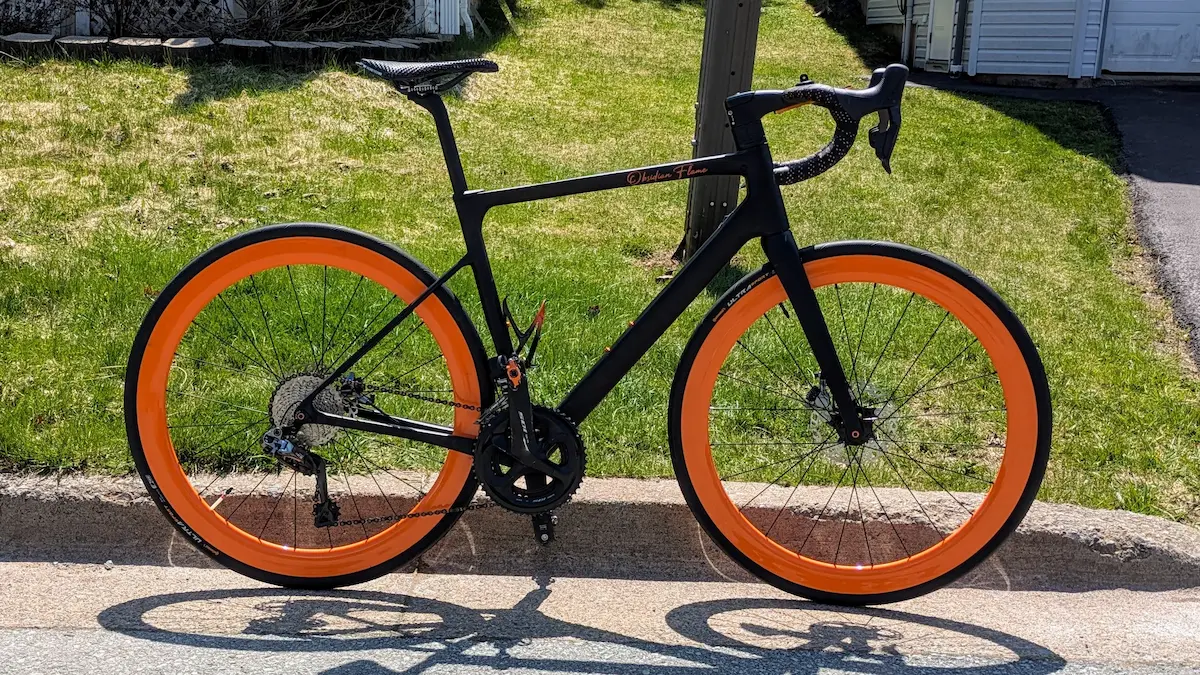
If you’ve spent any time around bikes, you know the safest answer is usually the obvious one.
Walk into your local bike shop, buy from a mainstream manufacturer, and you’re getting more than just a frame and components. You’re buying into dealer support, warranty backing, service expertise, and the kind of long-term relationship that keeps your bike running years after the initial excitement fades.
There’s a reason the established names dominate the conversation.
The engineering is proven. The supply chains are mature. Replacement parts exist. If something goes sideways, there’s usually someone local who can make it right.
Your local bike shop is still, and probably always will be, the gold standard.
But There’s Another Side
There are real deals to be found if you’re willing to do the research, take your time, and occasionally accept a little uncertainty.
Building outside the traditional retail ecosystem can stretch your budget further, open up options you won’t find from mainstream manufacturers, and sometimes land you with a bike that punches well above its price point.
There’s also something genuinely valuable about doing it yourself.
Building, upgrading, and troubleshooting your own bike teaches you how everything works. You gain confidence maintaining it, diagnosing issues, and understanding what actually matters when components succee, or fail.
That knowledge is hard to put a price on.
Of course, there’s a catch.
The DIY route often comes with hidden costs.
Specialty tools add up quickly. A bargain groupset can lose some of its shine when you realize you also need a bottom bracket press, torque wrench, bleed kit, bearing tools, cable cutters, and the dozen other little things bike projects somehow always demand.
Sometimes the savings are substantial.
Sometimes the “great deal” becomes a lesson in why bike shops exist.
That balance is exactly what we want to explore.
The Other Side of the Bike World
There’s an entire parallel universe of frames, components, wheelsets, and groupsets evolving outside the mainstream ecosystem.
Sometimes it’s innovation moving faster than legacy brands can react.
Sometimes it’s smaller manufacturers building genuinely excellent products without the massive marketing machine.
And yes, sometimes it’s a gamble.
That’s where things get interesting.
Over the coming months, we’re going to dig into that world.
Not because the big brands are doing anything wrong, but because curiosity is part of what makes cycling fun.
The AliExpress Problem
Let’s address the obvious elephant in the room.
Ordering bike parts from AliExpress can feel like playing carbon roulette.
For every rider posting about an incredible deal on a flawless cockpit or wheelset, there’s another with a horror story involving questionable tolerances, mystery carbon layups, disappearing vendors, or support that evaporates the second tracking says “delivered.”
The biggest risk usually isn’t what arrives.
It’s what you don’t know.
Who designed it?
Who tested it?
What quality controls exist?
What happens if it fails?
That doesn’t mean everything there is junk.
Far from it.
It just means buying safely requires homework.
How to Navigate It Safely
If you’re venturing beyond traditional retail, a few rules matter:
Research obsessively
If no one reputable has reviewed it, that’s a red flag.
Look for community validation
The cycling community is remarkably good at identifying what’s worth your money and what belongs nowhere near your steerer tube.
Start with low-risk components
Bar tape? Fine.
Bottle cages? Sure.
Critical structural components? Proceed carefully.
Understand the tradeoff
Saving money often means giving up warranty simplicity and local support.
The People Doing the Homework
Thankfully, there are people and platforms doing a lot of the legwork.
Panda Podium has built a reputation by acting as a filter, helping source products while adding a layer of accountability and QA many direct-purchase platforms lack.
Then there are creators like Luke at Trace Velo, who have spent years making the mistakes so the rest of us don’t have to.
If something catastrophically fails, there’s a decent chance Luke has already tested it, broken it, or at least made a video about it.
That kind of transparency matters.
Even highly opinionated engineers like Hambini have pointed riders toward manufacturers producing genuinely impressive products, even when their storefronts look like they were built sometime around the early internet.
Hidden Gems Exist
Some of these companies are quietly building outstanding products.
LightCarbon is a perfect example.
Their web presence feels… unfinished, and you have to contact them via email to actually buy (or they did when I bought my gravel frame there).
But their products have developed a strong reputation among riders willing to dig deeper. I picked up my gravel frame through them, and it proved exactly why doing the research can pay off.
The same goes for Carbonda, where my road frame came from. They’ve become a legitimate option for riders wanting custom geometry, paint, and build flexibility without premium-brand pricing.
And for Canadian riders looking for something between direct-import uncertainty and full traditional retail, retailers like Yoeleo Canada help bridge that gap.
That middle ground is becoming increasingly important.
Why This Matters
This isn’t just about saving money.
It’s about choice.
Want colours the mainstream brands won’t offer?
Want a frame nobody else on your group ride has?
Curious about emerging groupsets challenging the Shimano and SRAM duopoly?
Interested in building something truly your own?
That’s where this conversation gets exciting.
Cycling has always had room for tinkerers, builders, and experimenters.
We think it’s time to explore that side of the sport more openly.
What’s Coming
We’ll be diving into:
- Non-mainstream frame manufacturers
- Emerging drivetrain options
- Custom paint and finish possibilities
- How to evaluate direct-to-consumer components
- When saving money makes sense
- When paying more absolutely does
- The tools you actually need (and the ones you don’t)
The mainstream brands still set the benchmark.
Your local bike shop is still your best ally.
But beyond that familiar world, there’s an entire ecosystem of fascinating possibilities.
Some brilliant.
Some questionable.
Some surprisingly excellent.
We’re going to find out which is which.